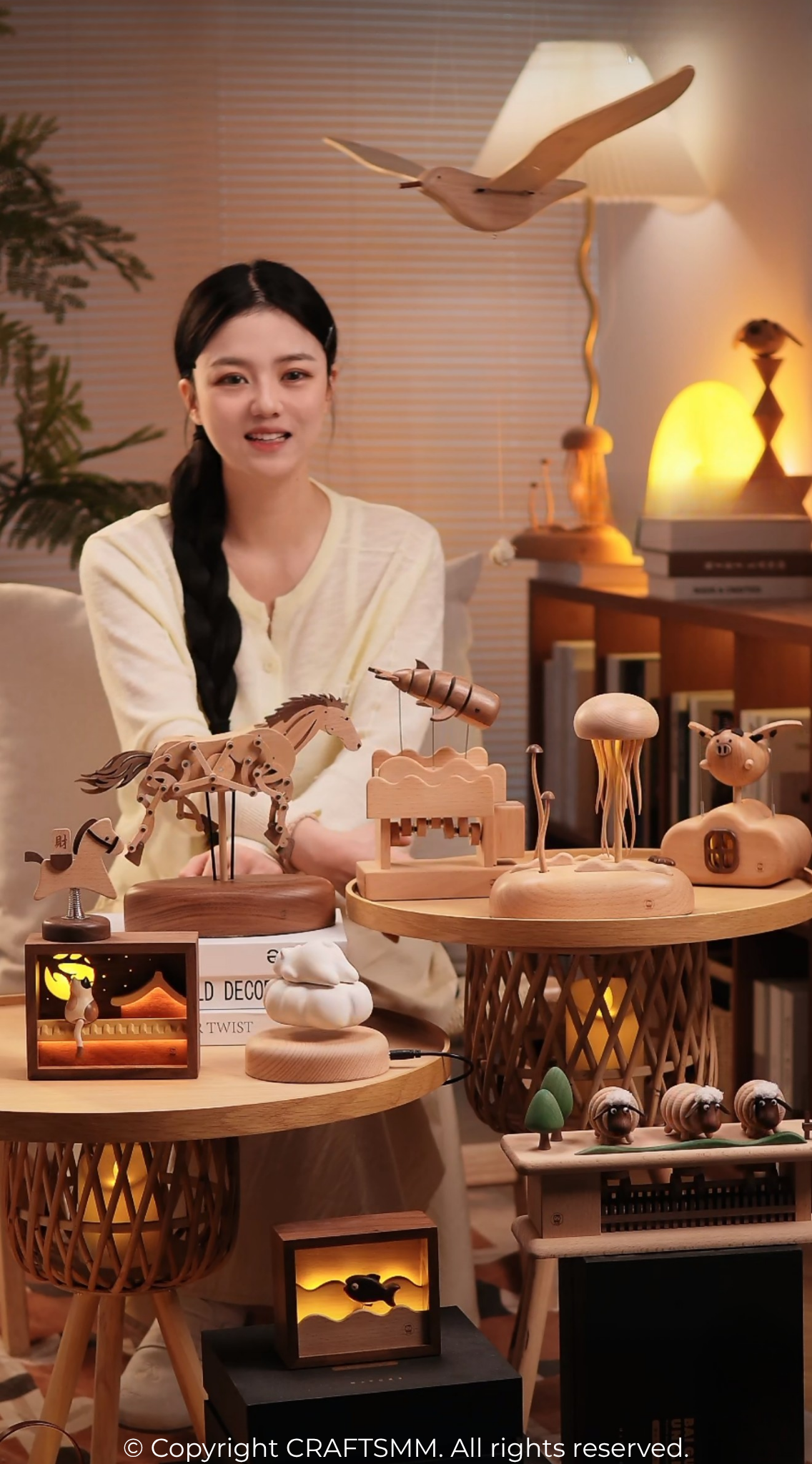
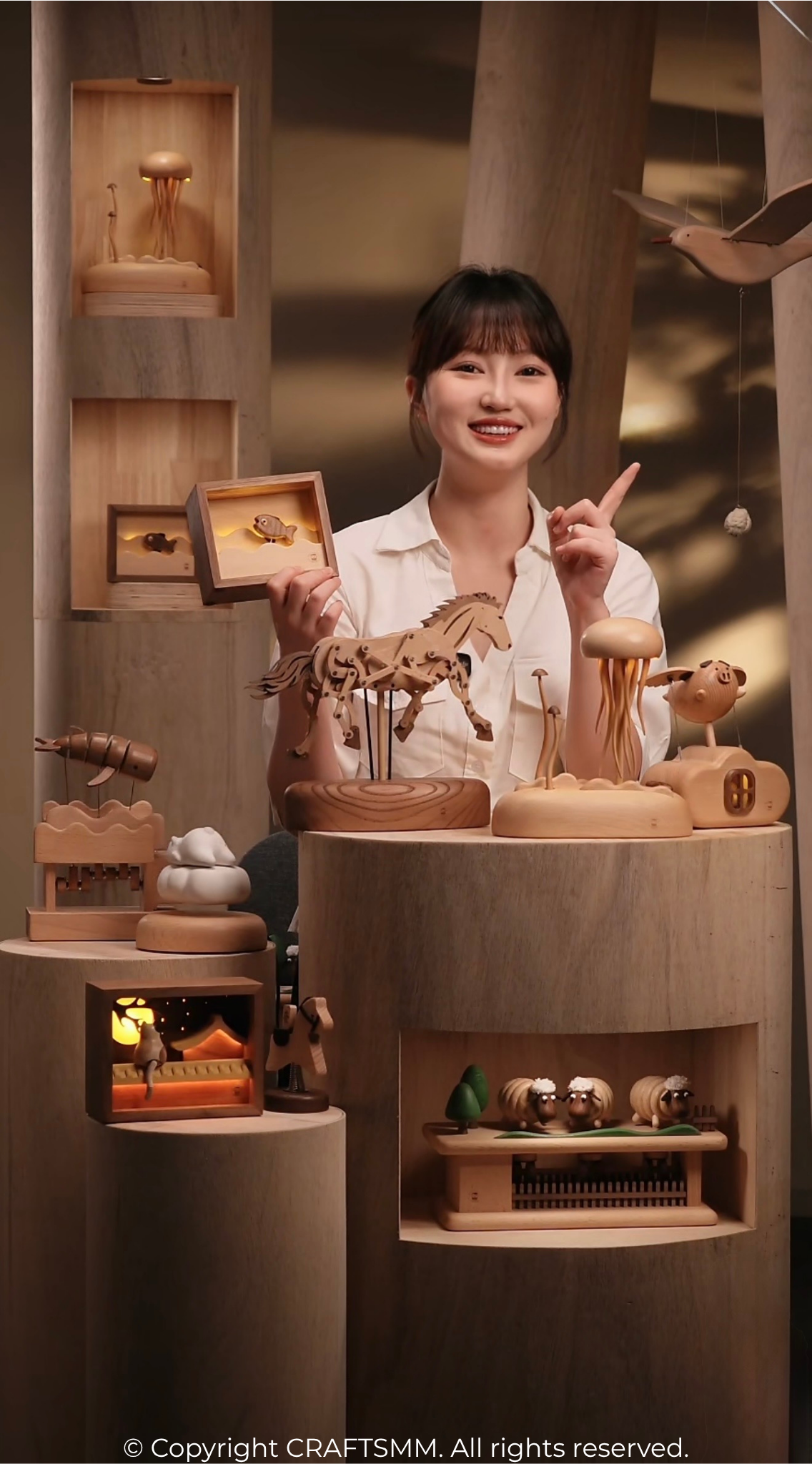
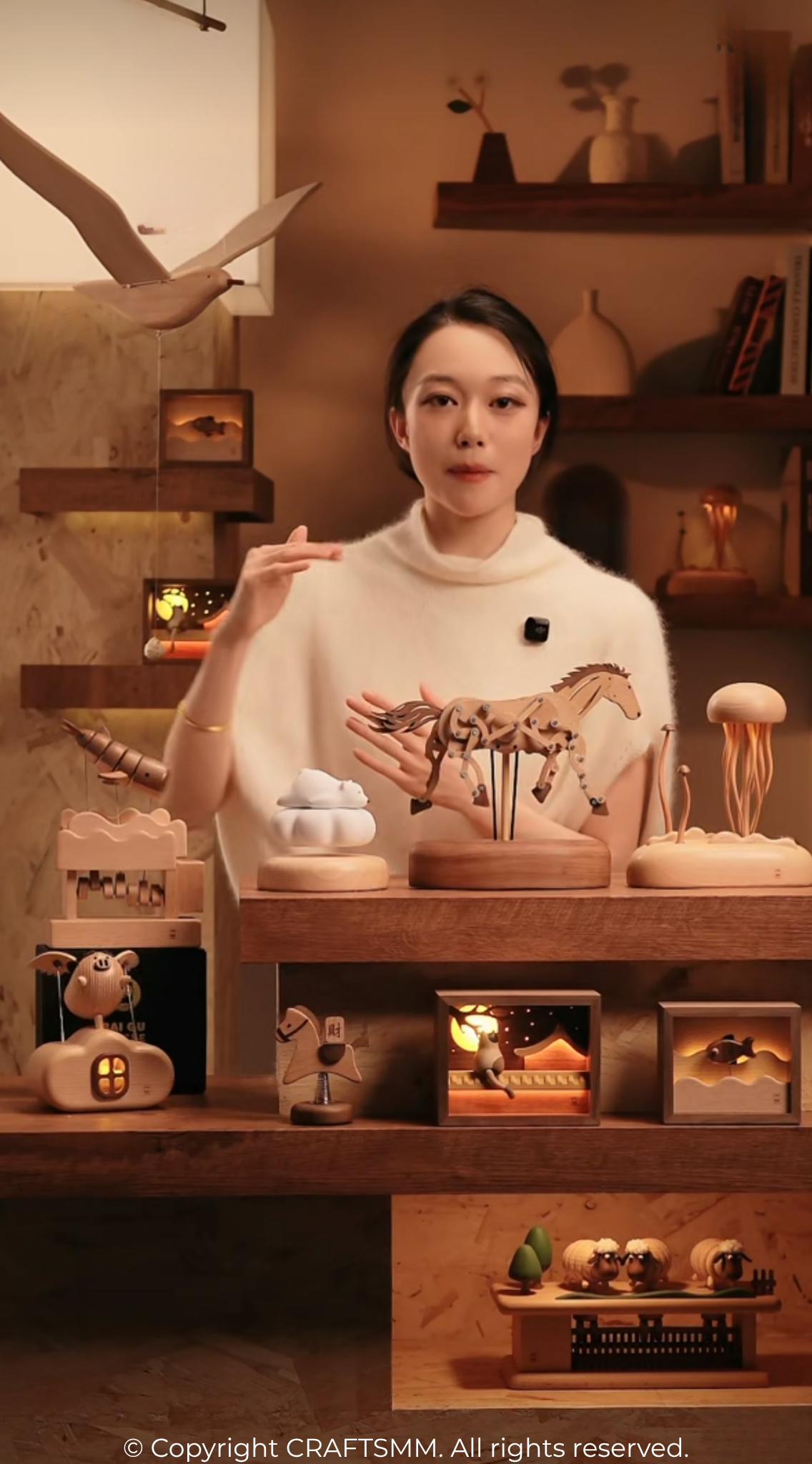
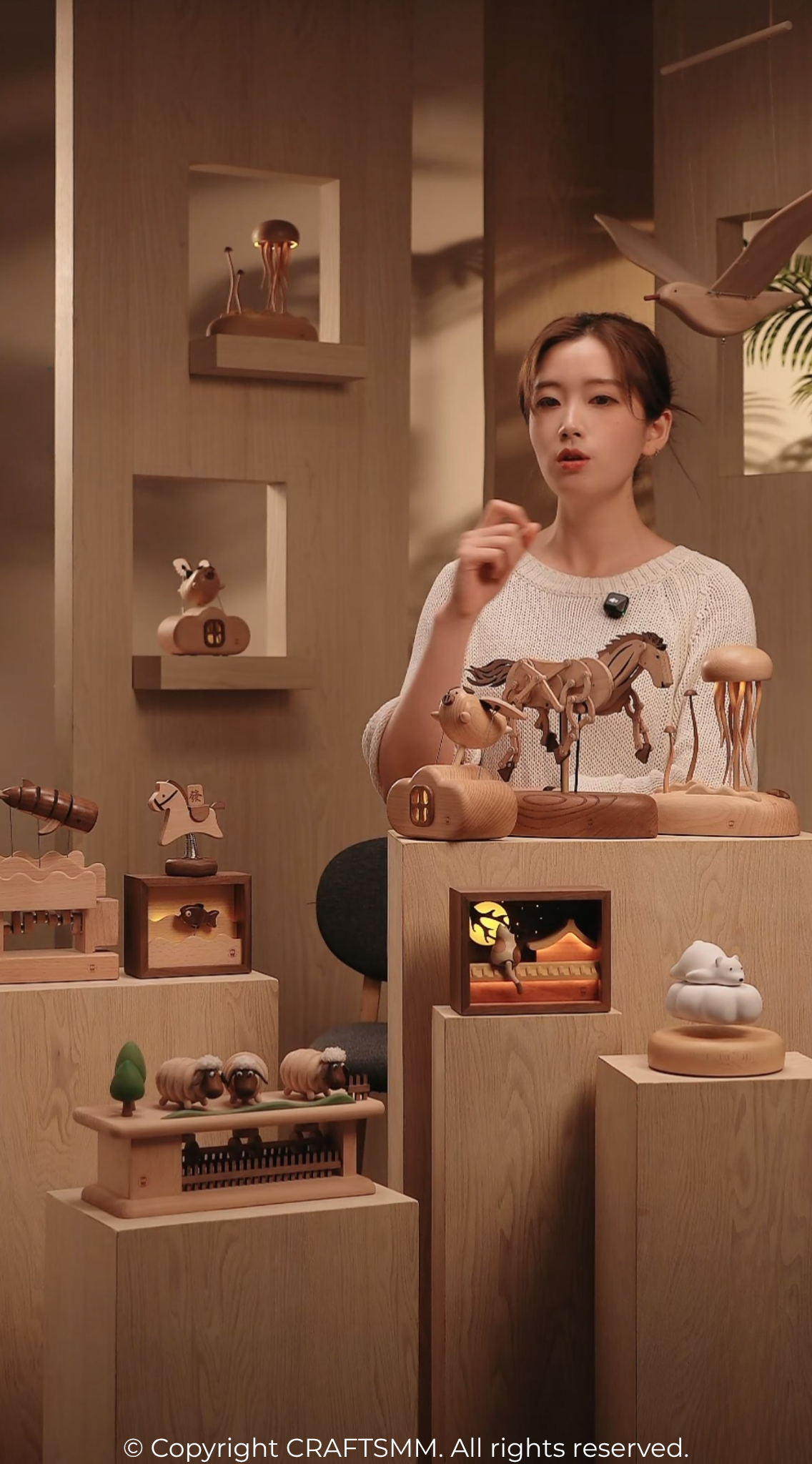
The Story Behind the Galloping Horse Wooden Automata
Freedom in Every Stride
Across an open field, a galloping horse seems to move with complete freedom.
Its mane follows the wind, its body stretches forward and its hooves rise from the ground for a brief moment. Power travels from the shoulders through the body and into the legs, yet every movement appears natural, fluid and effortless.
This moment of suspended motion became the inspiration behind our Galloping Horse Wooden Automata.
We wanted to capture more than the appearance of a horse. We wanted to recreate the rhythm of a real gallop—the instant when strength, balance and freedom become a single movement.
For us, the horse represents courage, endurance and the desire to move beyond familiar boundaries.
“True freedom appears when every part finds its rhythm—and moves forward together.”
A Symbol of Freedom and Courage
Throughout history, horses have accompanied people on long journeys, carried them across unknown landscapes and become symbols of trust, determination and independence.
A galloping horse does not simply move forward. Every part of its body participates in the motion.
The neck extends, the shoulders shift, the back responds and each leg follows a different path before returning to the same rhythm. What appears effortless from a distance is actually the result of an extraordinarily precise sequence of movements.
Movement Translated into Wood
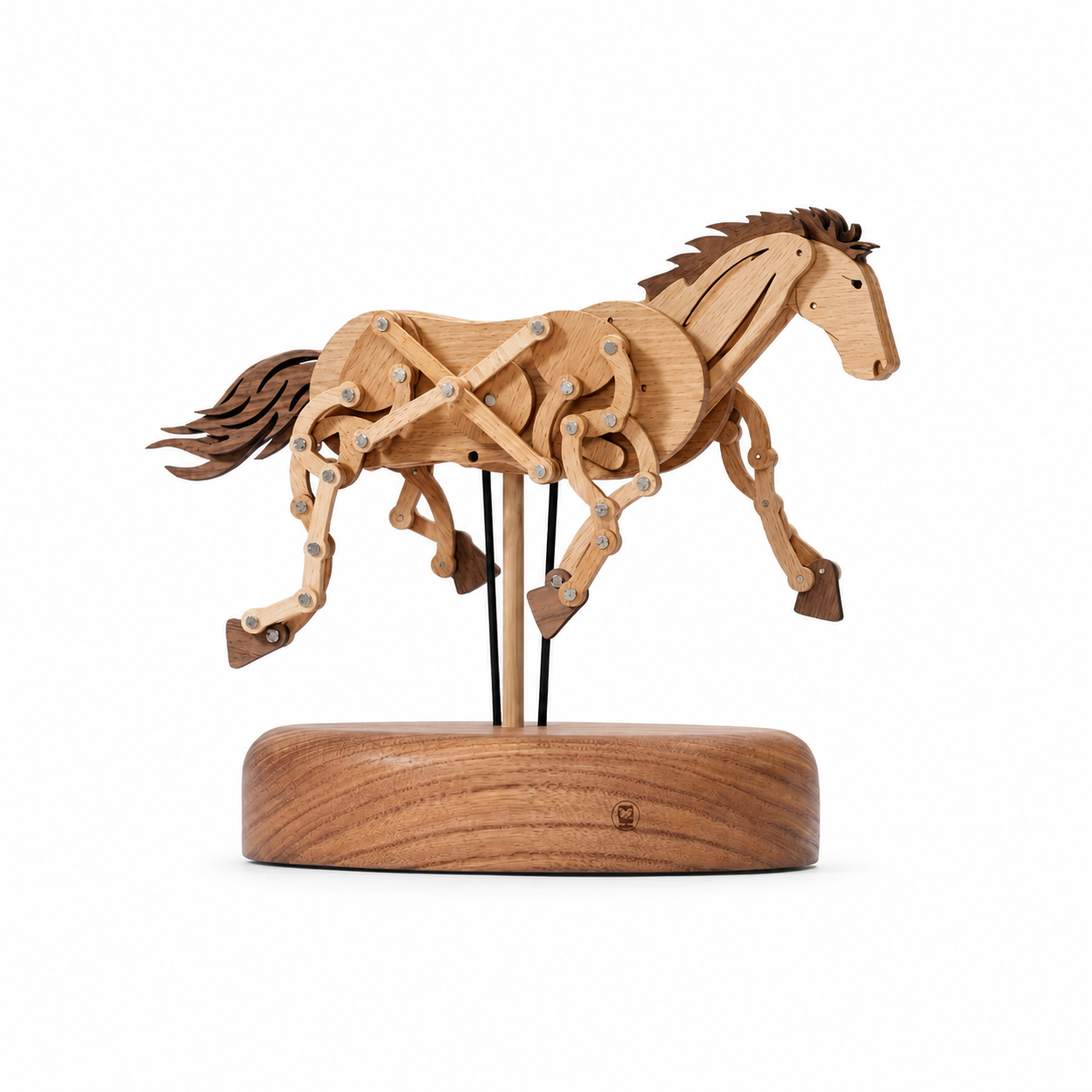
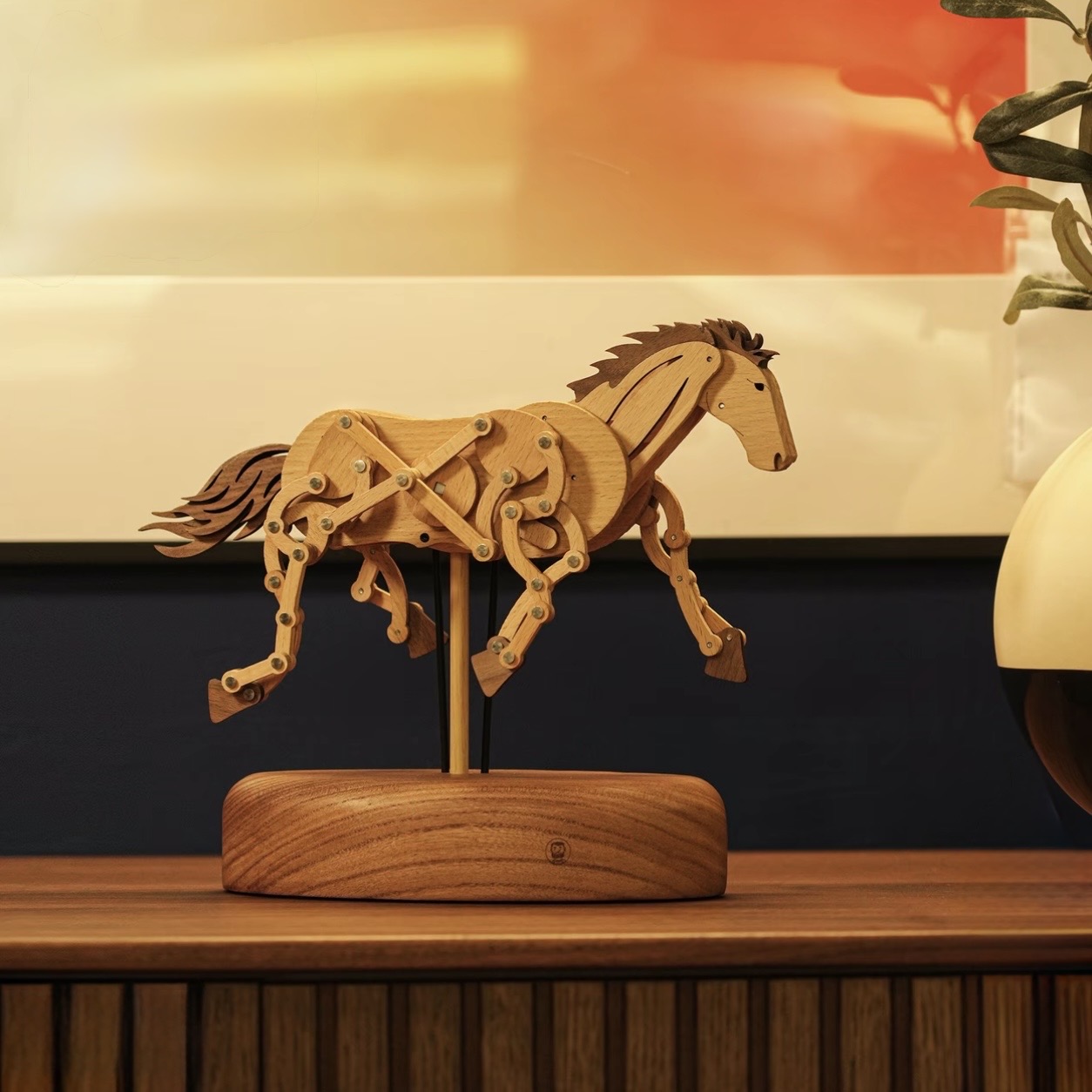
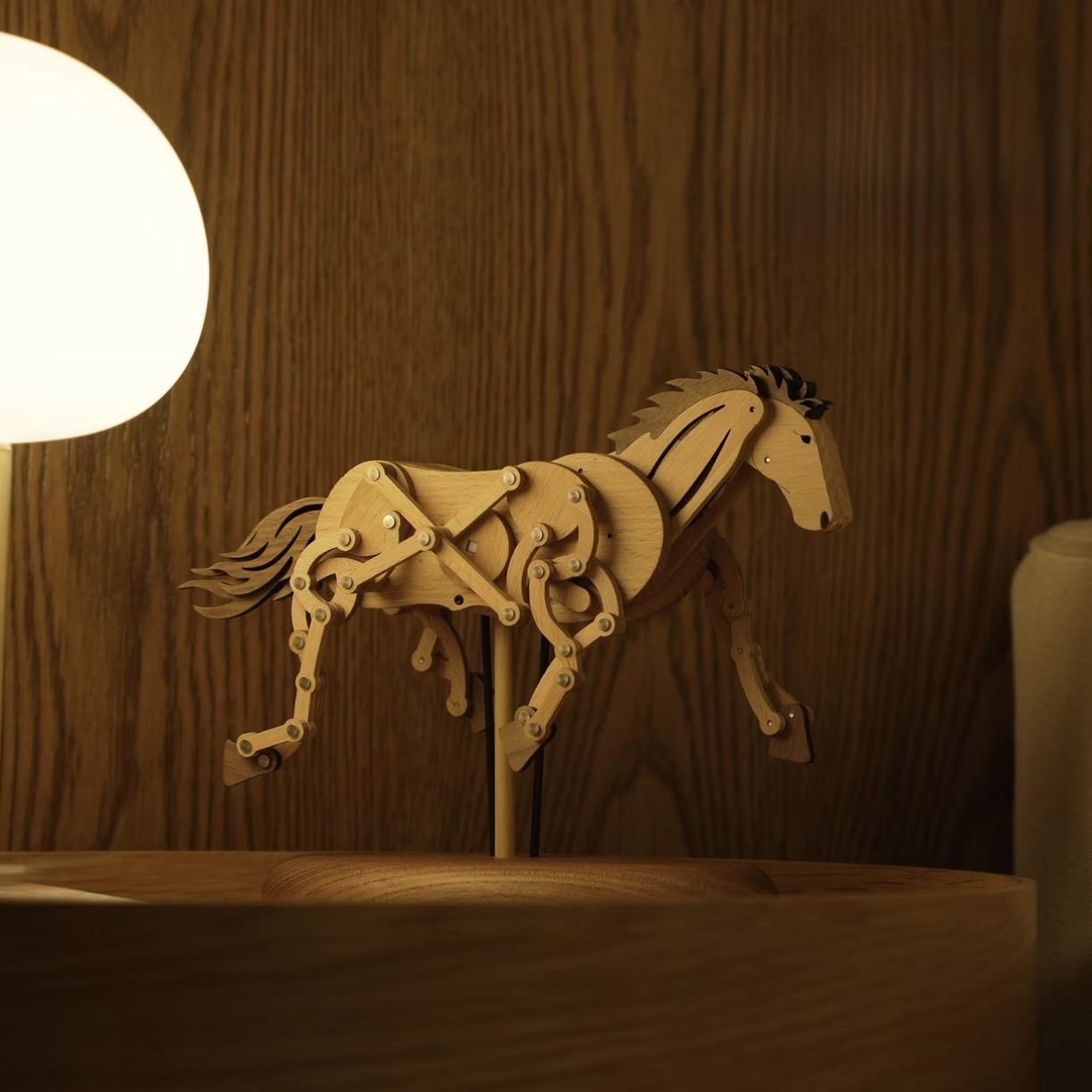
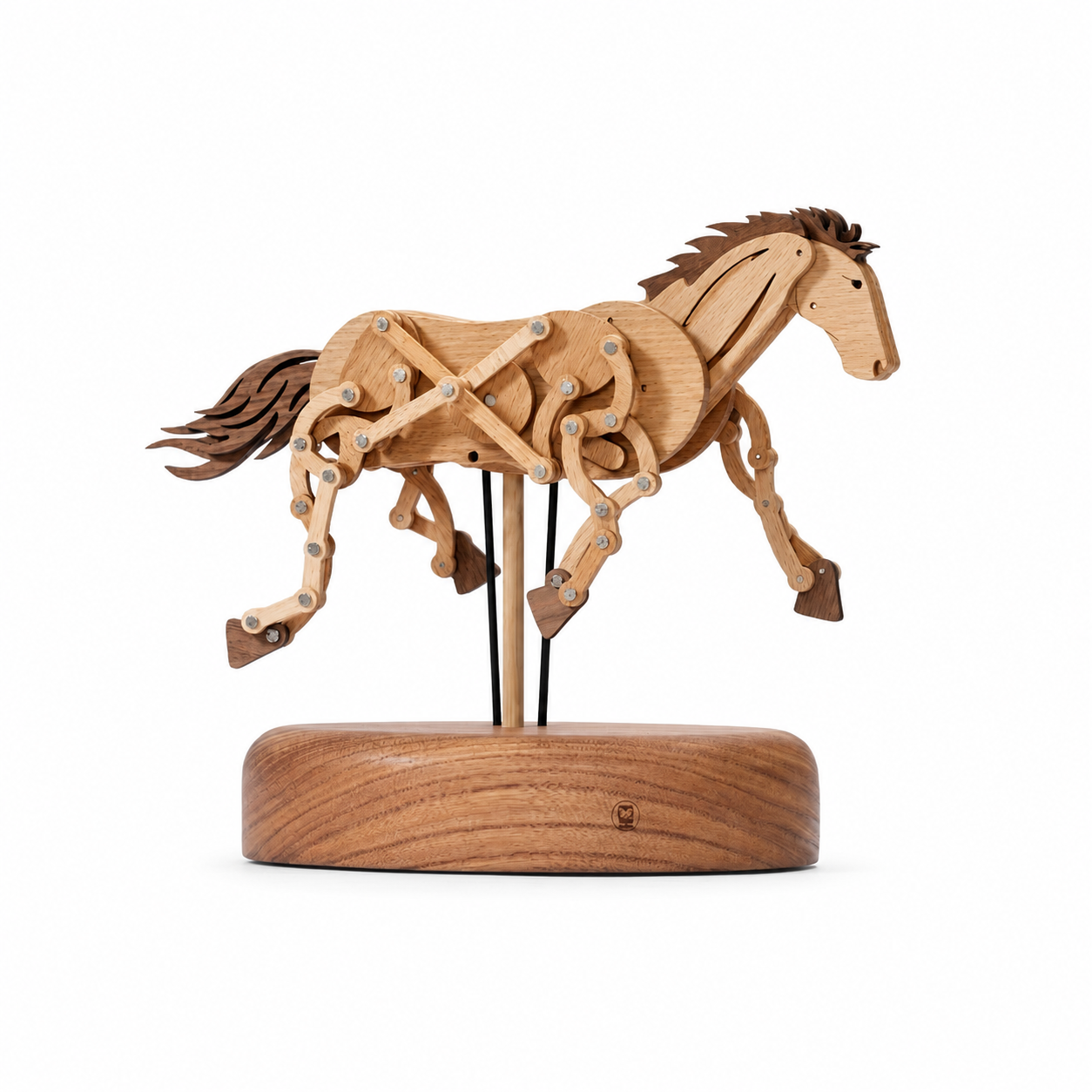
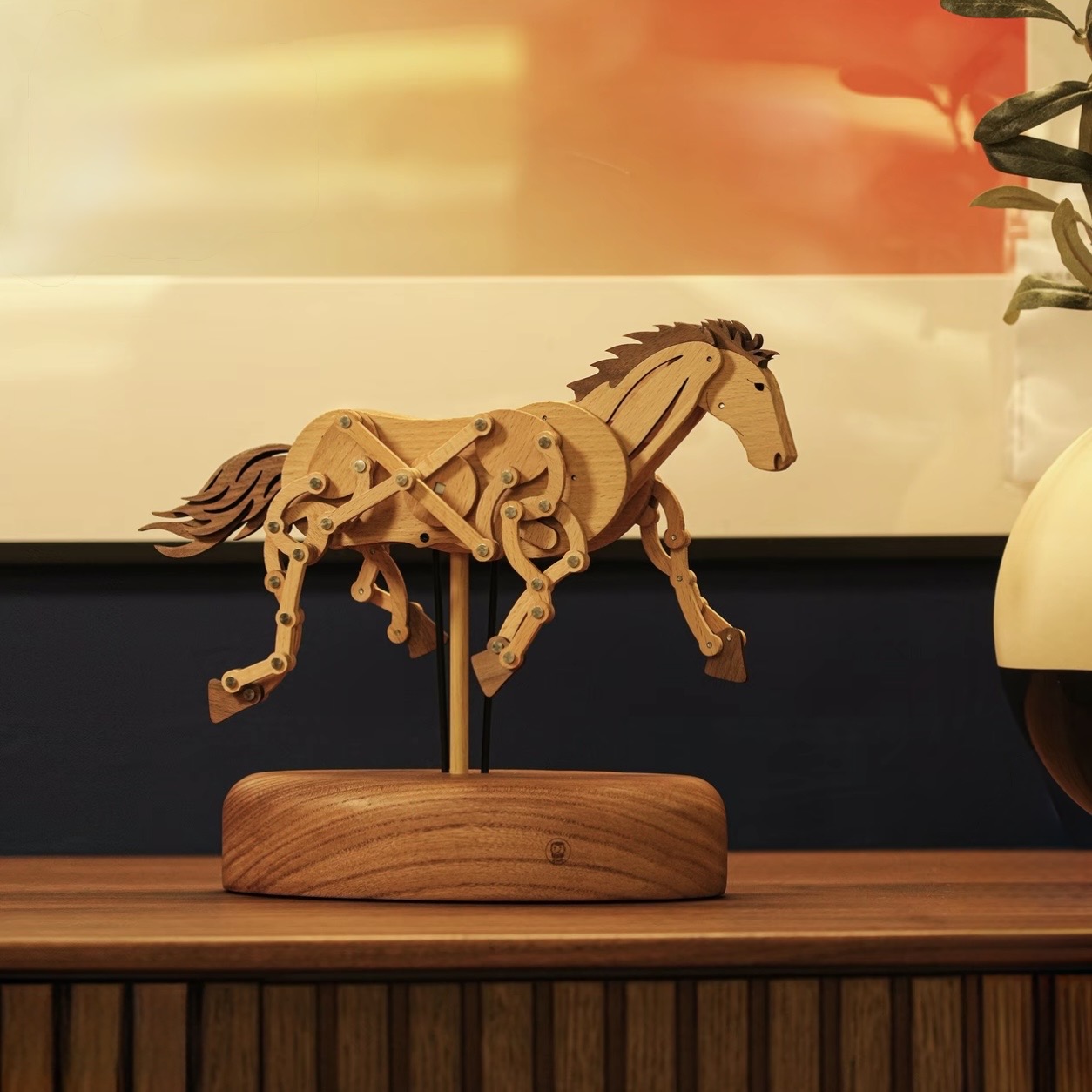
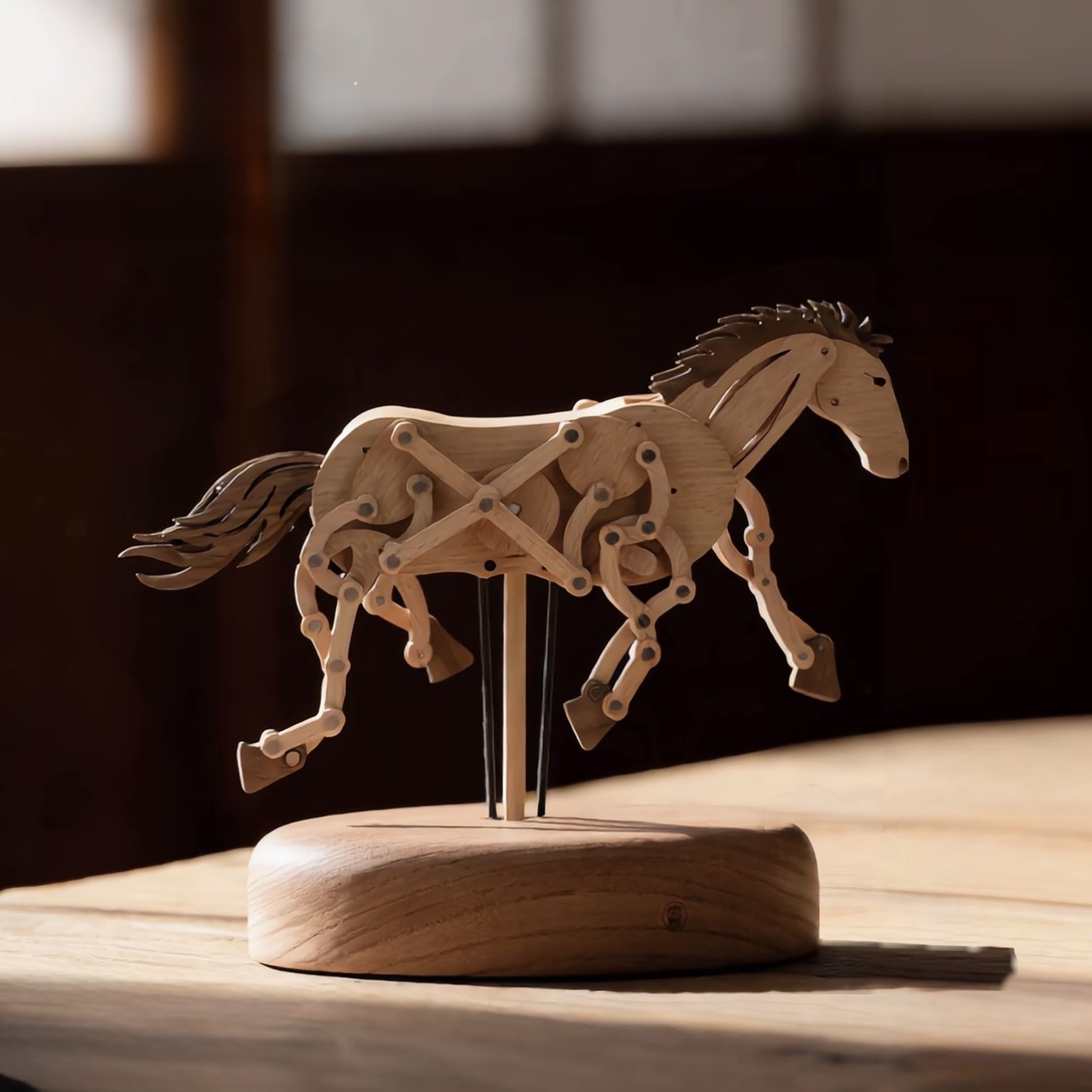
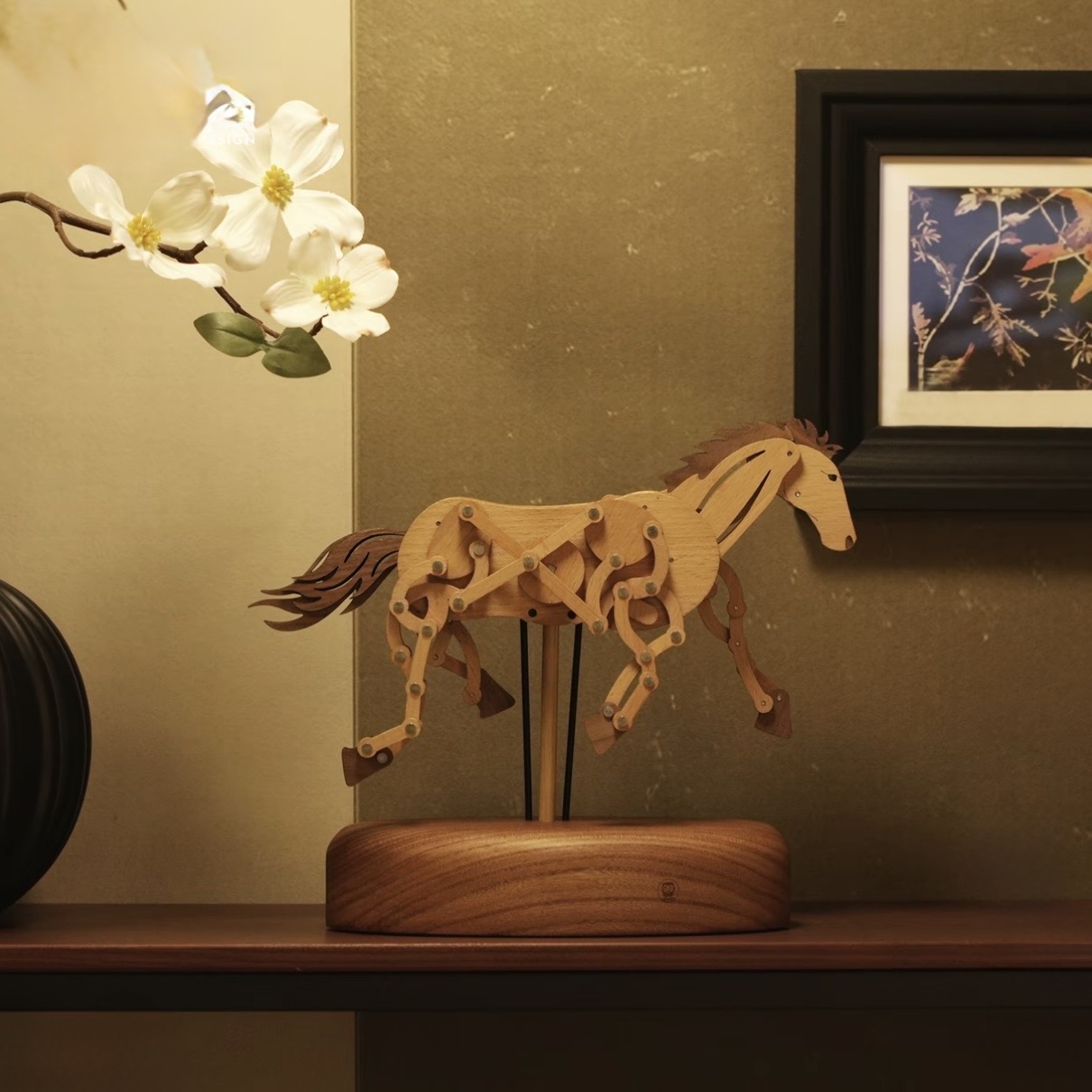
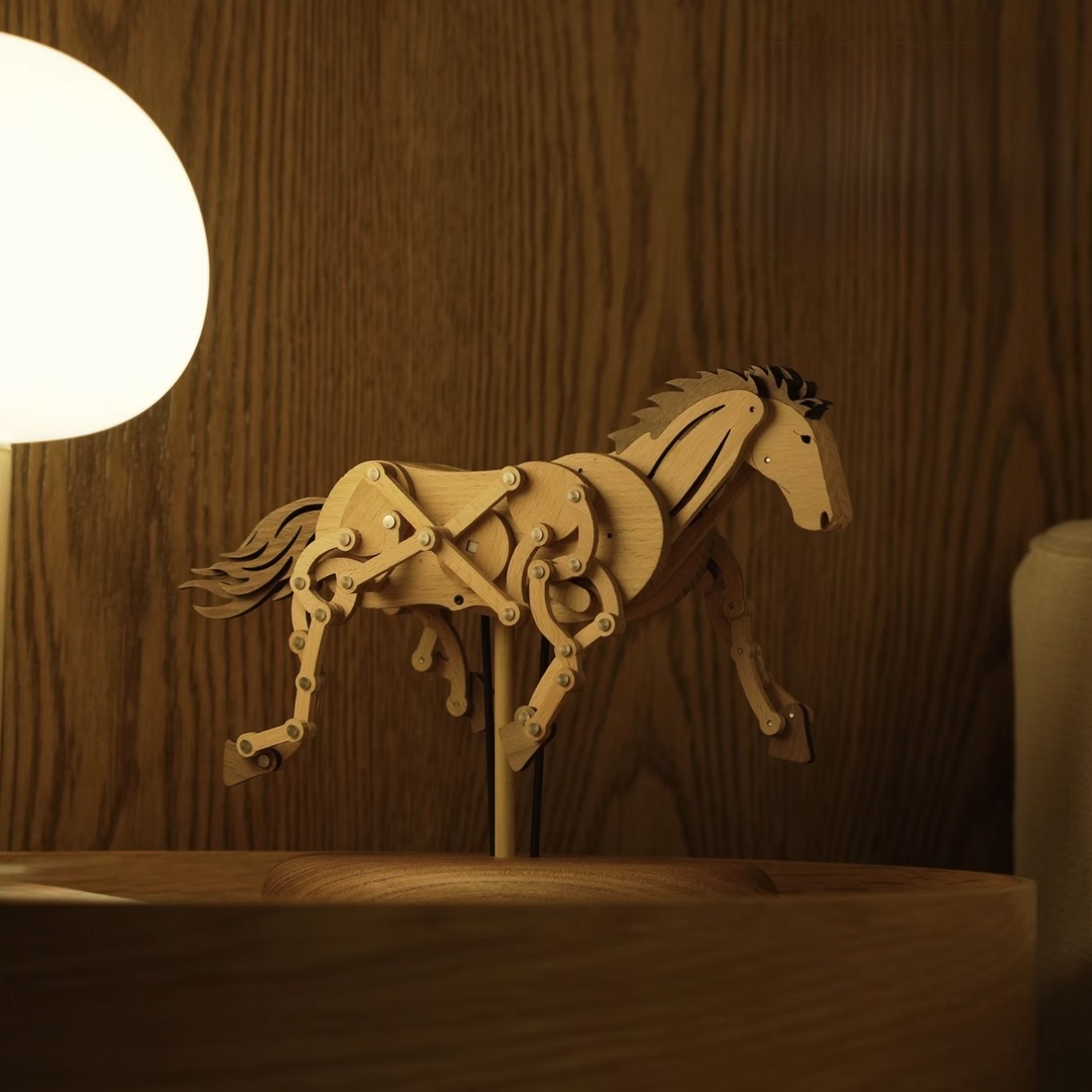
The horse is constructed from multiple individually shaped wooden components. Its body, shoulders, hips, upper legs, lower legs, joints and hooves are connected through a carefully arranged mechanical linkage system.
No single part moves independently. Every component affects the movement of the next. The motion of one joint changes the angle of another, and the position of each leg influences the balance and rhythm of the entire horse.
When the mechanism begins to operate, these separate wooden pieces must come together as one living form.
Every Part Moves Together
The front and rear legs move through different phases of the galloping cycle, while the body maintains the balance required to make the horse appear suspended in motion.
Each joint, linkage and rotating component forms part of a complete mechanical sequence. A change in one section affects the position, timing and movement of the surrounding components.
This closely connected structure is what allows the automata to recreate the coordinated rhythm of a real galloping horse.
Precision in Every Joint
Every connecting point, linkage and rotating component must be positioned with precision.
Even a slight deviation in angle, spacing or tension can interrupt the movement sequence, create resistance or prevent the mechanism from operating correctly.
A component may appear properly installed while the sculpture is stationary, yet reveal an imbalance once the horse begins to move.
Individually Calibrated by Hand
Final assembly is only the beginning of the calibration process. Each automata must be repeatedly tested and adjusted by hand.
Our craftspeople observe the complete movement cycle, checking the position of every joint and the timing of every leg.
If one section moves too early, too late or through an incorrect angle, the related components must be carefully readjusted. Correcting one joint may also require the surrounding linkages to be recalibrated.
The process continues until every component moves in harmony and the full mechanical sequence becomes smooth, balanced and continuous.
Refined by Hand
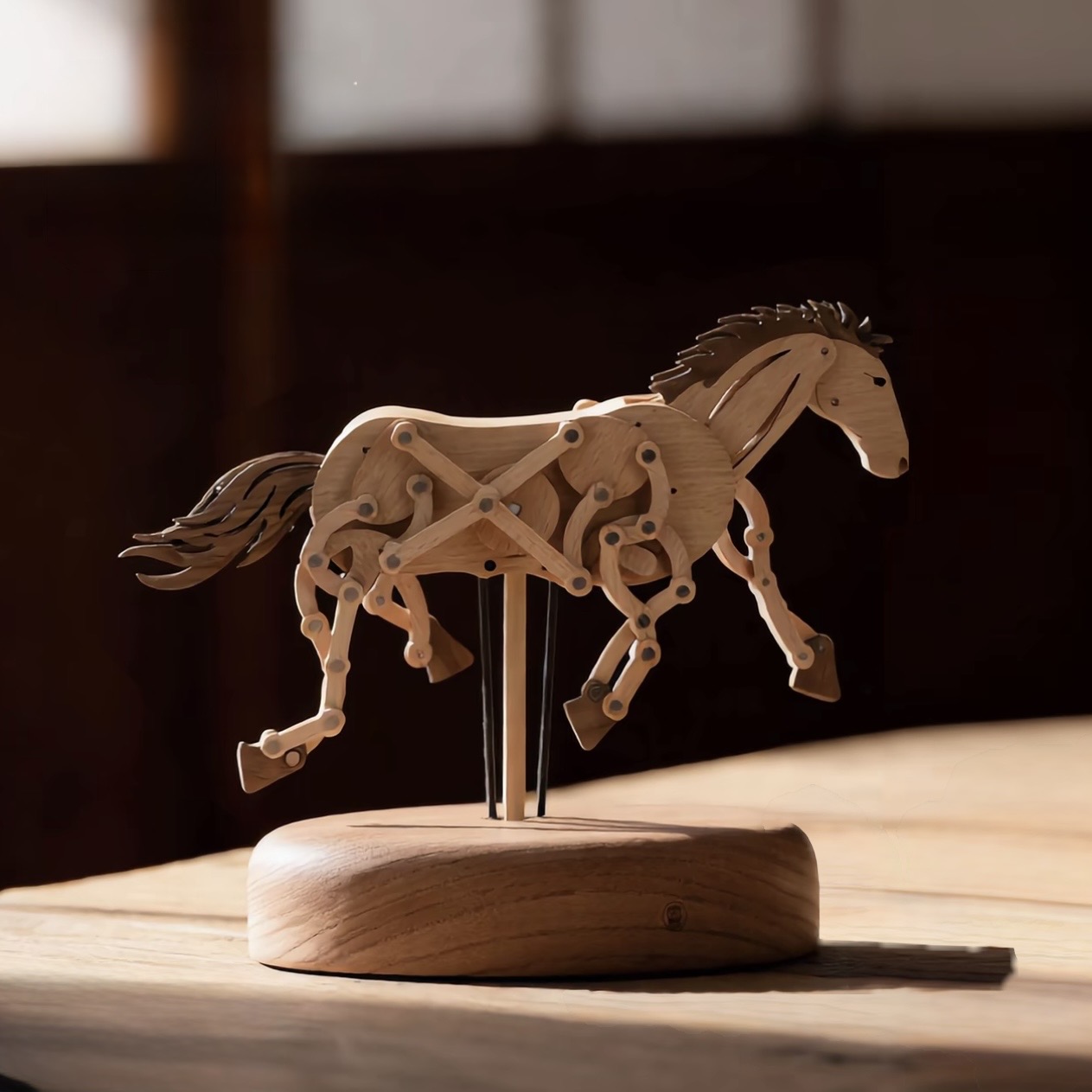
Natural wood gives the mechanical structure warmth and character. Each wooden component is individually shaped and polished by hand.
The handcrafted process preserves the natural grain, tonal variations and subtle markings of the material while creating smooth edges and carefully formed curves.
Because every piece of wood grows differently, each completed horse carries a slightly different pattern and visual identity.
Mechanics Made Visible
The visible joints and connecting rods are intentionally preserved as part of the design.
Rather than hiding the mechanism beneath a closed surface, the sculpture allows the viewer to see how movement is created.
The structure reflects the anatomy of a real horse, where muscles, bones and joints must work together to complete every stride.
Awakened Through Motion
When activated, the horse gradually comes to life. Its articulated legs begin moving in sequence, recreating the rhythm of a galloping stride.
The mechanical structure transforms a collection of solid wooden components into a sculpture filled with direction, energy and movement.
Thoughtfully Crafted Details
Solid Natural Wood
Crafted from natural wood with visible grain, tonal variation and individual character.
Multi-Joint Construction
Multiple articulated sections work together to recreate the anatomy of a galloping horse.
Interconnected Movement
Every joint influences the next, forming one complete mechanical sequence.
Precision Linkage System
Carefully positioned linkages coordinate the timing and angle of every moving section.
Individually Calibrated
Every mechanism is repeatedly tested and fine-tuned by hand before completion.
Galloping Motion
The articulated legs move in sequence to recreate the rhythm of a horse in full stride.
Visible Mechanical Art
Exposed joints and connecting rods reveal how the movement is created.
Hand-Shaped Components
Each wooden component is individually shaped to form the horse’s detailed structure.
Hand-Polished Finish
Carefully polished by hand for smooth edges and a warm natural touch.
Smooth, Balanced Operation
Careful calibration helps create continuous and properly balanced movement.
Product Note: This model does not include a nightlight. Its design focuses on natural wood craftsmanship, articulated galloping movement and the precision of its interconnected mechanical structure.
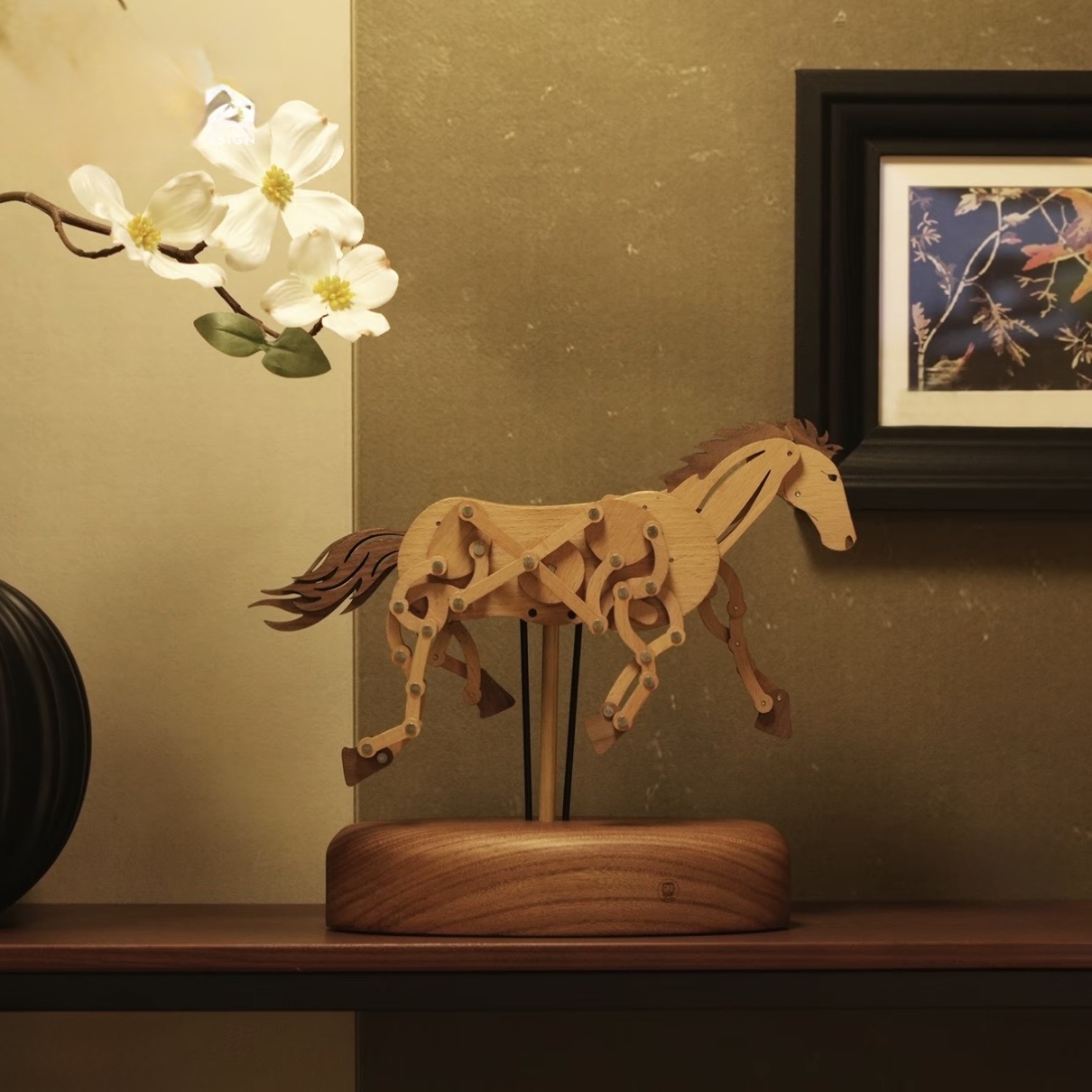
More than a decorative object, the Galloping Horse Wooden Automata brings together natural materials, anatomical observation, mechanical engineering and patient hand calibration.
Every joint has a purpose, every component influences another, and every stride depends on the accuracy of the complete system.